
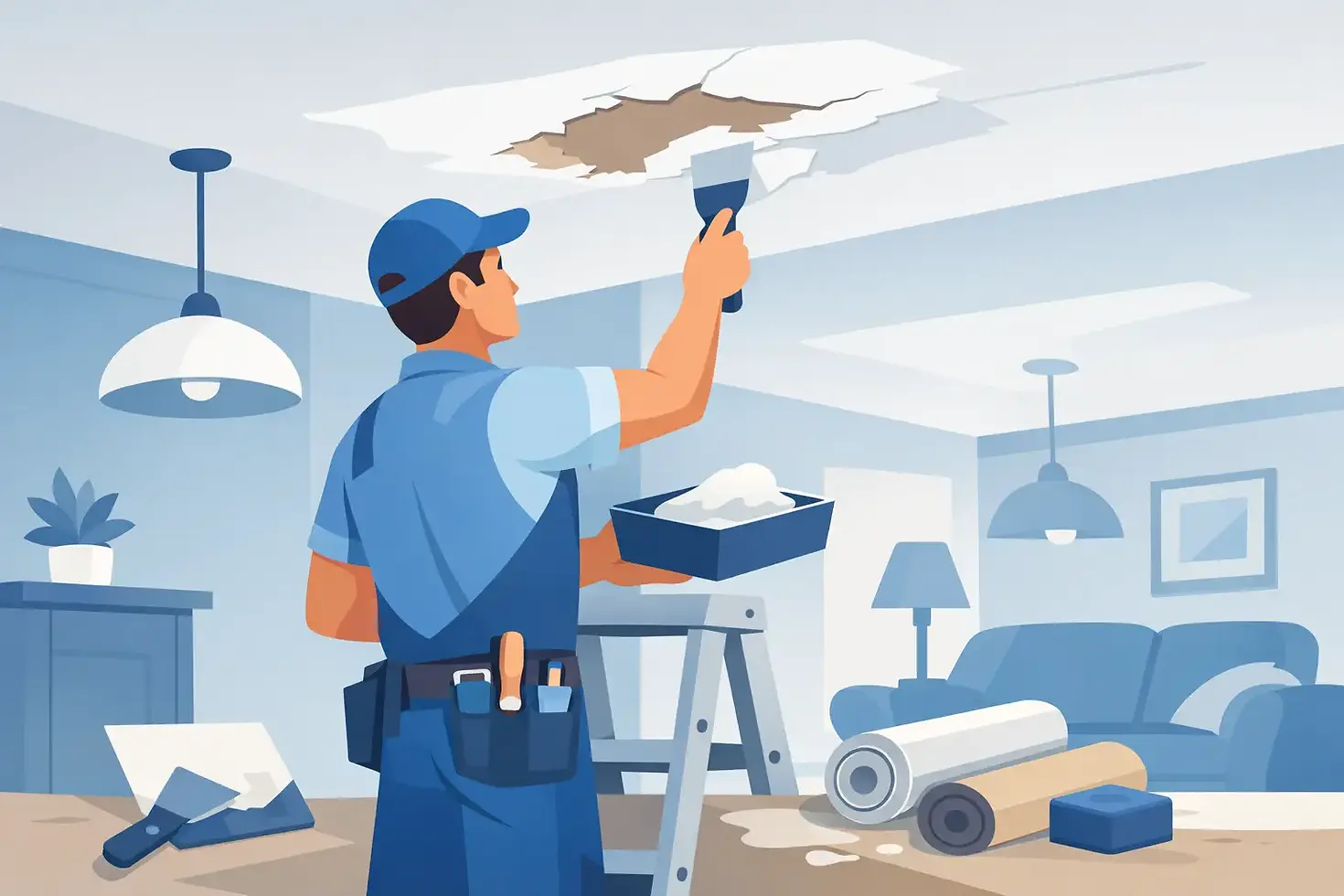
Ballwin Drywall Ceiling Repair Done Right
- Salem Developments
- Jul 6
- 6 min read

A ceiling problem rarely stays small for long. What starts as a hairline crack, a soft spot from an old leak, or a sagging seam can quickly turn into peeling texture, stained drywall, and a room that looks neglected. If you need Ballwin drywall ceiling repair, the real goal is not just covering damage. It is restoring a clean, solid finish that holds up and looks right with the rest of the space.
Ceiling repairs are different from wall repairs in one key way - every flaw shows. Light from windows and fixtures hits the surface at angles that expose uneven joints, bad patches, and texture that does not match. That is why ceiling work needs to be handled with a steady process, the right materials, and finishing that blends into the existing surface instead of standing out.
When Ballwin drywall ceiling repair is the right call
Not every damaged ceiling needs full replacement. In many homes and commercial spaces, a targeted repair is the smarter move. If the drywall is structurally sound in most areas and the issue is limited to cracks, water stains, small holes, tape failure, or localized sagging, repair usually makes more sense than tearing out the whole ceiling.
That said, there is always an inspection step that matters. A cosmetic crack can be simple settling, or it can point to framing movement. A stain can be left over from an old leak that was fixed, or it can mean moisture is still active above the ceiling. A patch that keeps reopening often means the original cause was never addressed. The visible damage is only part of the job. The real work is figuring out why it happened and whether the surrounding material is still worth saving.
For property owners, that distinction affects budget and long-term results. A proper repair costs less than unnecessary replacement, but a cheap patch over hidden issues usually leads to callbacks, more mess, and paying twice.
The most common ceiling problems we see
Water damage is one of the biggest reasons homeowners call for ceiling repair. It may come from a roof leak, plumbing issue, HVAC condensation, or a bathroom above the damaged area. Once moisture gets into drywall, the paper face weakens, joints loosen, and staining spreads. Sometimes the damaged section can be cut out and replaced cleanly. Other times, the area is larger than it looks, especially if the drywall has softened or mold is present.
Cracks are another common issue, particularly along seams and corners where tape starts to fail. In older homes, settlement and seasonal movement can stress ceiling joints over time. In newer work, poor fastening or weak finishing can cause seams to show earlier than they should. A real repair means securing loose areas, replacing failed tape if needed, and refinishing the surface so the crack does not return right away.
Sagging ceilings can be more serious. In some cases, the drywall has detached from framing because of age, moisture, or improper installation. If the board is bowing, pulling at seams, or dropping near fasteners, it needs more than filler and paint. It needs to be resecured or replaced before the issue spreads.
Then there is accidental damage. Access cuts from electrical or plumbing work, impact holes, and previous repair attempts that were poorly done are all common. These are fixable, but only if the patch is installed flush, finished properly, and blended into the existing texture.
What separates a clean repair from an obvious patch
A ceiling patch can technically be repaired and still look bad. That is the difference between getting the surface closed up and getting the room back to normal.
The first part is cutting back to stable material. Damaged drywall should not be patched over if it is soft, crumbling, or loose at the edges. The surrounding area has to be secure, dry, and solid enough to hold a lasting repair. From there, the replacement piece has to fit tight and be properly fastened so movement does not telegraph through the finish.
The second part is finishing. This is where many repair jobs fail visually. Ceiling joints need smooth transitions, not heavy buildup. Mud has to be applied in controlled coats, sanded correctly, and feathered wide enough that the repaired area disappears under paint. On textured ceilings, matching the existing pattern is just as important as repairing the substrate underneath. A patch with the wrong knockdown, orange peel, or hand texture will stand out from across the room.
The final part is painting. Even a perfect drywall repair can look off if the finish is not sealed and painted correctly. Depending on the age of the ceiling, spot painting may not blend well, especially where staining was involved. In many cases, repainting the full ceiling gives the cleanest result.
Why ceiling texture matching matters
Texture matching is where experience shows. A repair may be smooth and structurally sound, but if the surrounding ceiling has texture, the patch still has to blend with what is already there. This is especially true in living rooms, hallways, entry areas, and commercial spaces with broad overhead lighting.
There is no one-size-fits-all approach. Some ceilings need a light spray texture. Others have heavier knockdown or older hand-applied patterns that take more judgment to replicate. Even when the texture style is obvious, age and paint buildup can change the look of the existing surface. That means the repair process has to account for what the ceiling looks like now, not what it may have looked like when it was first finished.
This is one reason do-it-yourself ceiling repairs often end up being redone. The patch itself may hold, but the finish never truly blends. For owners getting a home ready to sell or managers maintaining a professional commercial space, that difference matters.
Repair versus replacement - what makes sense?
Some customers ask whether they should repair one section or replace the entire ceiling. The answer depends on the extent of damage, the age of the drywall, and what caused the issue in the first place.
If damage is isolated and the rest of the ceiling is in good condition, repair is usually the practical choice. It keeps costs lower, shortens disruption, and solves the problem without overbuilding the project. This is often the best route for small leak areas, seam cracks, access openings, and single-room cosmetic damage.
If the ceiling has multiple failed seams, widespread staining, repeated patches, sagging across large spans, or moisture damage in several areas, replacement may be the better value. There is no benefit in repairing section after section if the overall system is already failing. In finished basements and commercial interiors, that decision also depends on how the surrounding work ties together, including insulation, framing, paint, and trim.
That is where working with one contractor helps. If the issue extends beyond drywall alone, it saves time to have the same crew handle the patching, texture, painting, and related finish work instead of piecing the project out to multiple trades.
What to expect from a professional ceiling repair process
A good repair starts with a straight answer about the scope. That means identifying the cause of damage, checking the surrounding drywall, and determining whether the area can be repaired cleanly or if a larger section should come out.
Once the damaged material is removed, the repair area is rebuilt with proper backing or framing support where needed. New drywall is installed flush, seams are taped, and the finish is built in stages so the surface stays flat and stable. After that comes texture matching and paint prep.
The timeline depends on the size of the repair and the finish being applied. Small ceiling patches may move quickly, while larger repairs involving water damage, multiple coats, and texture blending can take longer because drying time matters. Rushing that part usually leads to shrinkage, flashing, or visible seams later.
For occupied homes and businesses, cleanup and containment matter too. Ceiling work creates dust, and protecting floors, furniture, and adjacent finishes is part of doing the job professionally.
Choosing the right contractor for Ballwin drywall ceiling repair
Ceiling repair is not the place to gamble on the lowest bid if the result has to look right. You want a contractor who understands repair work, not just new drywall installation. There is a difference. Repairs require judgment, blending, and the ability to work around existing finishes without turning a small problem into a full remodel.
Look for a company that can handle more than the patch itself. If the job involves repainting, texture matching, framing correction, or tying into a basement or interior remodel, broader capability makes the process smoother. That is one reason many local property owners call St. Louis Drywall Pros. The work can be handled from damaged ceiling to finished surface without handing the project off in pieces.
If your ceiling is cracked, stained, sagging, or showing signs of failed drywall joints, waiting usually makes the repair bigger and more expensive. A solid repair now protects the room, improves the appearance of the space, and saves you from dealing with the same problem again a few months later. The best next step is simple - get the ceiling looked at, get a clear quote, and fix it before the damage spreads.


Comments